
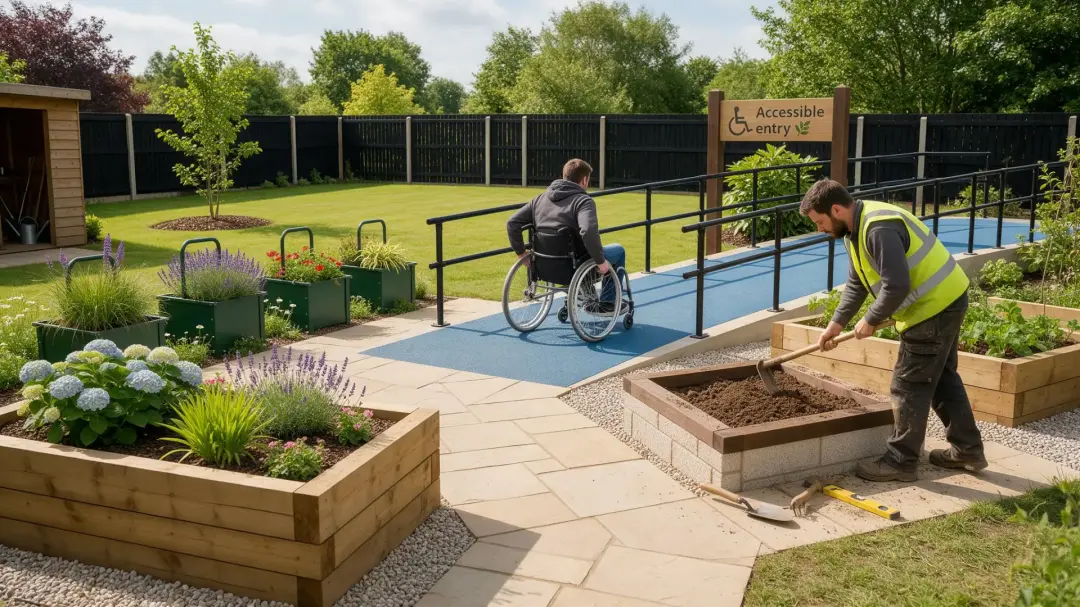
Updating Raised Beds, Ramps and Paths for an Accessible Garden
Updating an existing garden for accessibility does not always mean starting from scratch. This article explains how raised beds, ramps, entrances and paths can be reviewed in a practical order, so the changes focus first on the areas that will make the greatest difference to daily access and confidence.
Surface condition matters when upgrading paths and entrances. In 2024 to 2025, slips, trips and falls on the same level accounted for 30% of employer-reported non-fatal injuries in Great Britain. Those are workplace figures, not garden-incident data, but they reinforce the value of firm, even, well-drained walking surfaces and clearly handled changes in level. Read the HSE injury statistics.
Assess the existing layout
An upgrade begins with a close look at how the garden is used now. Trace the route from the door to important destinations and note uneven paving, difficult turns, steps and places that become wet.
Ask the person using the space where they move comfortably and where they need help. A feature that looks awkward on a plan may work well, while a small threshold may be their main barrier. Photographs taken after rain can help show where water gathers, while a simple sketch of difficult journeys can keep the upgrade focused on actual use.
Rank the findings by their effect on daily life before selecting finishes. Improving the only route to a favourite seat may matter more than rebuilding a border at the far end of the plot.
Improve paths and entrances
Start where people enter the garden. A sound path is less useful if the door threshold or first paving slab is difficult to cross, so inspect those joins as closely as the longer stretches.
Replace loose or settled areas with a firm, even route suited to the intended user. Leave room at gates and corners to move without brushing planting or reversing into a tight space. An entrance may also need space for a door to open fully while the user pauses on level ground before continuing along the path.
Water should drain away from the entrance without creating a hazard across the main route. Check the finished surface after rain and keep joints, edges and drains clear through routine care.
Integrate ramps thoughtfully
A ramp should connect two useful spaces with room to approach, turn and leave it comfortably. Follow the route the person wants to take rather than sending them on a long detour.
The available space, change in level and user's mobility determine what arrangement works. Discuss landings, handrails, edges and drainage with the people designing and building it before paving or planting is finalised. A handrail should suit the intended user’s grip and continue where support is genuinely needed, rather than ending before a difficult change of direction.
Make the ramp part of the landscape by relating its finish to nearby paths and keeping the route visually clear. Regular checks of the surface and handrails help it remain dependable.
Refresh raised planting
An existing raised bed may be too deep, too high or difficult to approach even when its structure is sound. Check whether the gardener can reach its plants from a stable position before rebuilding it.
Sometimes a narrower bed and a better path help more than raising the soil further. Leave space for the intended user to get close, and put water and tools within a manageable distance. Preserving a familiar bed can matter emotionally as well as practically, so adapt its approach and reach before assuming every existing feature must be removed.
Repair loose edges and choose planting that fits the care the gardener wants to give. A bed that remains easy to reach can keep a familiar and enjoyable part of the garden in use.
Coordinate the completed scheme
Paths, ramps, planting and lighting should work as one route. Before work ends, follow a typical journey through the garden and check each join between new and existing features.
Make sure drainage channels, cable covers and changes of surface do not interrupt movement. Lighting controls should be convenient, with any electrical work completed by a suitably qualified person. Check the route again with ordinary items in place, including furniture, pots and bins, because a clear construction site can become a crowded everyday garden.
Walk the finished garden with its user. Their feedback may identify a chair that needs moving, a planter that is hard to reach or a turn that would benefit from a little more clear space.
Explore Accessible Garden Landscaping
For more ideas about practical paths, patios, raised planting and access improvements, visit our accessible garden landscapers page for services in Cromer, Norwich, Norfolk.