
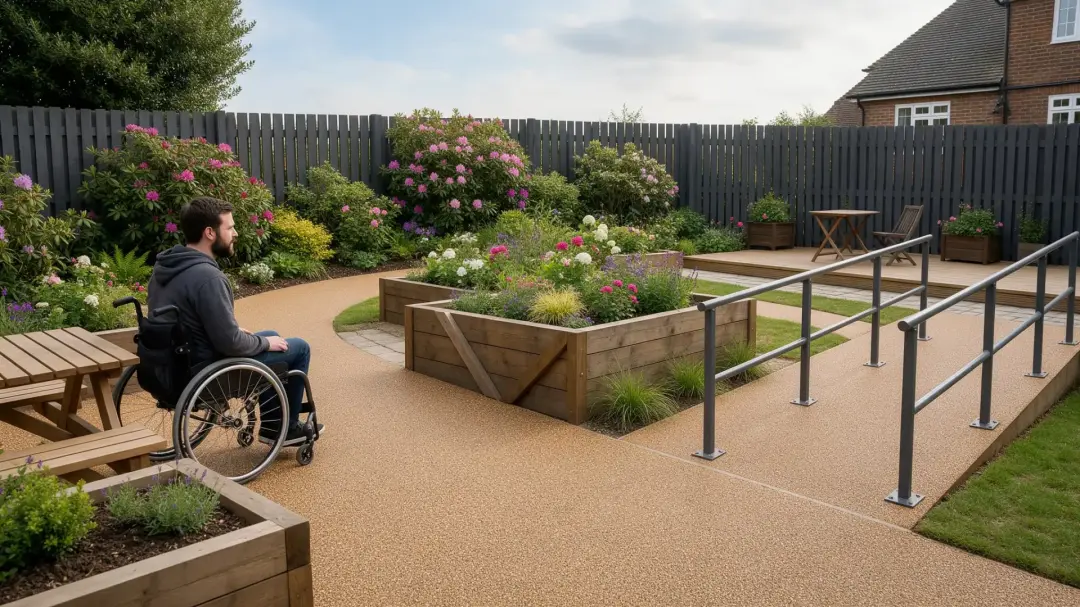
Features of a Safe and Accessible Garden
A safe and accessible garden is built around confident movement in every season. This article looks at the details that reduce avoidable hazards, including even routes, sensible drainage, clear edges, useful lighting and seating positioned where it is genuinely helpful.
In England, more than 200,000 emergency hospital admissions among people aged 65 and over were attributed to falls in 2023 to 2024. A garden cannot remove every risk, but clear routes, predictable level changes, good drainage and lighting can help make day-to-day outdoor movement more confident. Read the government housing and health evidence.
Create an obvious route
The main path should make the journey from the door to a seat, planting area or gate easy to understand. Avoid sending people around isolated beds or through furniture when a direct route would serve them better.
Look at the route from the position of the person using it. A turn that seems open while walking may feel tight with a wheelchair or walking aid, particularly where a gate or planter projects into the path. Where the path branches, a consistent surface or clear change in edging can show which way leads back to the house without relying on a sign.
Keep the edges visible and the way clear of trailing plants. Regular checks for settled paving or new obstacles help the route remain as dependable as it was when the landscaping work finished.
Manage water and surface grip
Find out where rainwater collects before replacing paths or patios. A surface that looks even on a dry day can become difficult when water sits at the back door or washes soil across it.
A firm finish with sound joints gives a more predictable route than loose material that shifts underfoot or under wheels. Ask to see and feel a sample with the intended user before choosing it. Pay particular attention to shaded corners, where moisture can linger, and to paving beside lawns, where soil or grass cuttings can spread onto the route.
Position drainage channels so they do not create a trip point or catch a wheel. Keep outlets free of leaves, and review the route after heavy rain to spot pooling that needs attention.
Use lighting with purpose
Light the points where someone changes direction or pace: the door, a turn, a step and a gate. A few well-placed fittings often help more than bright light across the entire garden.
Avoid glare aimed towards someone sitting down or leaving the house. Gentle, consistent light can show the path edge and a change in level while preserving useful contrast with the surrounding planting. Try the lighting after dark before settling on its final angle; a fitting that seems discreet by day may cast a strong shadow across a step.
Place switches or sensors around the user's routine so the lights come on before they are needed. Agree any cable routes during landscaping, with electrical work carried out by a suitably qualified person.
Include places to rest
A seat is most useful where someone naturally wants to pause, perhaps beside a longer route or near favourite plants. Give it a firm approach so resting does not require crossing a lawn.
Consider seat height, arms and the space beside it with the person who will use it. Some people need support when standing; others need room to park a mobility aid or sit with a companion. A small level area beside the seat can hold a walking aid or wheelchair without leaving it on the path or forcing someone to lean awkwardly.
A choice of sun or shade makes the spot more inviting through the day. Keep the approach clear as plants grow, and use stable furniture that is straightforward to maintain outdoors.
Plan for future change
Needs can change, so leave some flexibility in the layout. A clear route with generous turning points gives more options if a walking aid, wheelchair or extra assistance becomes part of daily life.
If a level change might later require a ramp or handrail, discuss the likely space and fixing points during the initial design. That can prevent a new bed or patio from blocking a sensible future route. Retaining a little open space near the door can also allow seating or storage to be rearranged as the person’s preferred way of using the garden changes.
Ask the user which activities matter most now, then revisit the garden as routines change. A practical space should be capable of adjustment without requiring every path and planted area to be rebuilt.
Explore Accessible Garden Landscaping
For more ideas about practical paths, patios, raised planting and access improvements, visit our wheelchair accessible garden design page for Cromer, Norwich and Norfolk.