
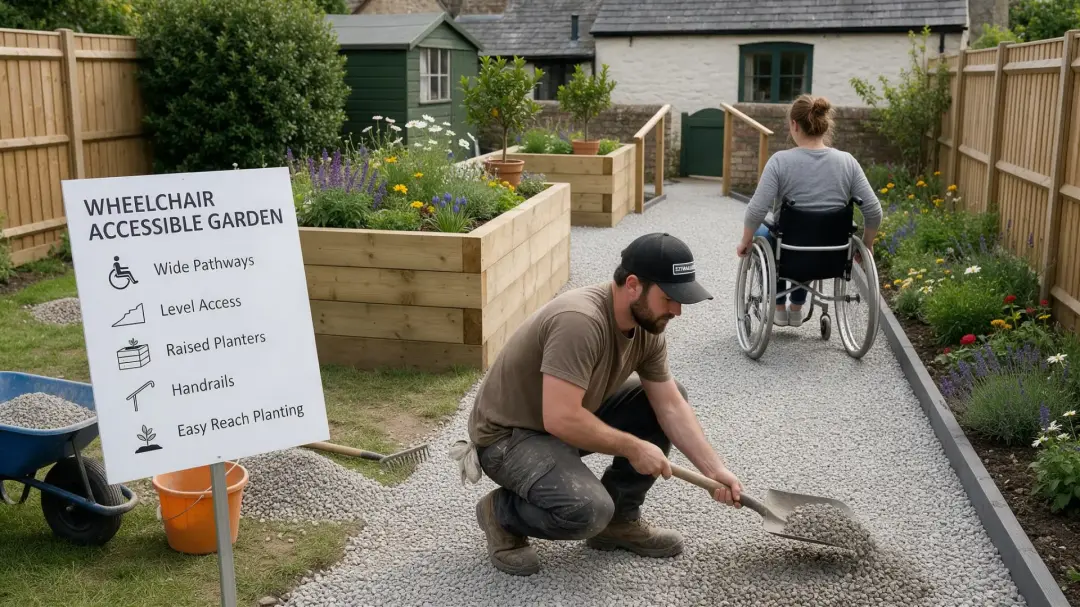
Accessible Garden Landscaping Ideas for Independent Living
Accessible landscaping can make it easier to enjoy familiar outdoor routines independently, from opening the back door to tending a favourite planter or sitting in the sun. Here, we share layout ideas that connect the home, paths, planting and rest areas into a garden that works with the person using it.
Government social-housing data for 2023 to 2024 recorded 3,300 households that said they required fully accessible housing. Of the 1,900 placed in General Needs accommodation, 65% received a home designed or adapted to wheelchair-user standards. An accessible garden extends that same thinking beyond the threshold, making outdoor routines and enjoyment more achievable at home. Read the official social-housing accessibility data.
Make space for daily routines
Think about the first few minutes outside: opening the door, crossing a patio, reaching a chair or tending a favourite pot. Put these everyday destinations on an easy route before deciding how the rest of the garden will look.
A clear area near the house can support several activities. Leave room to move a watering can, sit with a visitor or turn back indoors without shifting furniture from the main path. A place to put down keys, a mug or a small tool near the seating area can make a short visit outside easier to manage independently.
Ask the person using the garden which tasks they want to do independently and which they prefer to share. That conversation helps the layout support real habits instead of assumptions about how everyone gardens.
Use gentle level changes
Treat the journey between levels as part of the main design. A single step in the wrong place can prevent access to a useful area even when the paths on either side are excellent.
Levelling a small area might create a practical patio; a longer route might offer a gentler way to another part of the garden. The right answer depends on the site and the user's mobility. A gentle route still needs a clear beginning and end, with space to pause before a door or gate rather than finishing directly against an obstruction.
If a ramp or handrail is needed, connect it to the whole route rather than adding it at the end. Drainage, landing space and a clear view of the next turn all affect confidence.
Garden at a comfortable height
Raised beds bring soil and plants nearer, but comfortable height varies between people. Consider whether the gardener works seated or standing, how far they can reach and whether they need to approach closely.
Keep a bed narrow enough to tend without stretching across it. A firm path beside it makes watering and harvesting easier and helps prevent tools from being left in the travel route. Ask the gardener to try the intended working position before the bed is built, using a temporary surface to judge height and reach.
Choose a few plants the gardener enjoys tending, with water and tools nearby. The aim is satisfying contact with the garden, not a large new maintenance task that soon needs someone else's help.
Build in sensory interest
A garden can be engaging from a seat or path as well as from within a border. Put colour, scent and moving foliage where they can be noticed on an ordinary visit outside.
Consider the person's preferences and sensitivities before choosing strongly scented plants or textured surfaces. A calm, familiar route may be more welcome than a collection of features added all at once. A plant with interesting foliage near a seat may be enjoyed more often than a large display at the far end of an inaccessible lawn.
Use planting and lighting to distinguish destinations, such as a seating area and the way back to the door. Keep branches, pots and ornaments out of the path as the garden matures.
Keep the design easy to use
Independence rests on small details working together. Gates should be manageable, routes clear and seating available where it is wanted; an attractive feature is less useful if operating it requires help every time.
Put water and lighting controls where the intended user can reach them. Planning cable routes while landscaping is under way may also avoid lifting finished paving if lighting is installed later. If a gate latch is difficult to operate or a hose must be dragged across the route, those small practical problems deserve attention alongside the larger paving work.
Choose materials and planting that suit the care available at home. Review the space after a few weeks, when the user can say which parts feel effortless and which areas are still avoided.
Explore Accessible Garden Landscaping
For more ideas about practical paths, patios, raised planting and access improvements, visit our accessible garden landscapers page for Cromer, Norwich and Norfolk.